Seeds of Sinai

secular Jewish life

Anger ~ a secular midrash
There was once a person who became angry.

The anger arrived quickly, as anger often does. Someone had spoken carelessly. Someone had been unfair. Someone had failed to understand. The person felt the heat rise and thought:

“I have a right to be angry.”

And perhaps they did.

But having a right to anger did not answer the more difficult question:

What will I do with it?

So the person opened the ancient book and found The Book of Proverbs.

There they found this ancient observation (Proverbs, 15:1):

A soft answer turns away anger ~ מַֽעֲנֶה־רַּ֭ךְ יָשִׁ֣יב חֵמָ֑ה

The person did not understand this as a command to be submissive.

Instead, they understood it as an observation about human behavior.

Anger is contagious.

One angry person can recruit another.

An insult produces an insult.

A raised voice produces a raised voice.

Humiliation produces retaliation.

But the chain can be interrupted.

Simply by refusing to add more fuel.


And the person closed the book.

Proverbs reminds me that I can interrupt the spread of anger.

And so this short secular midrash ends.
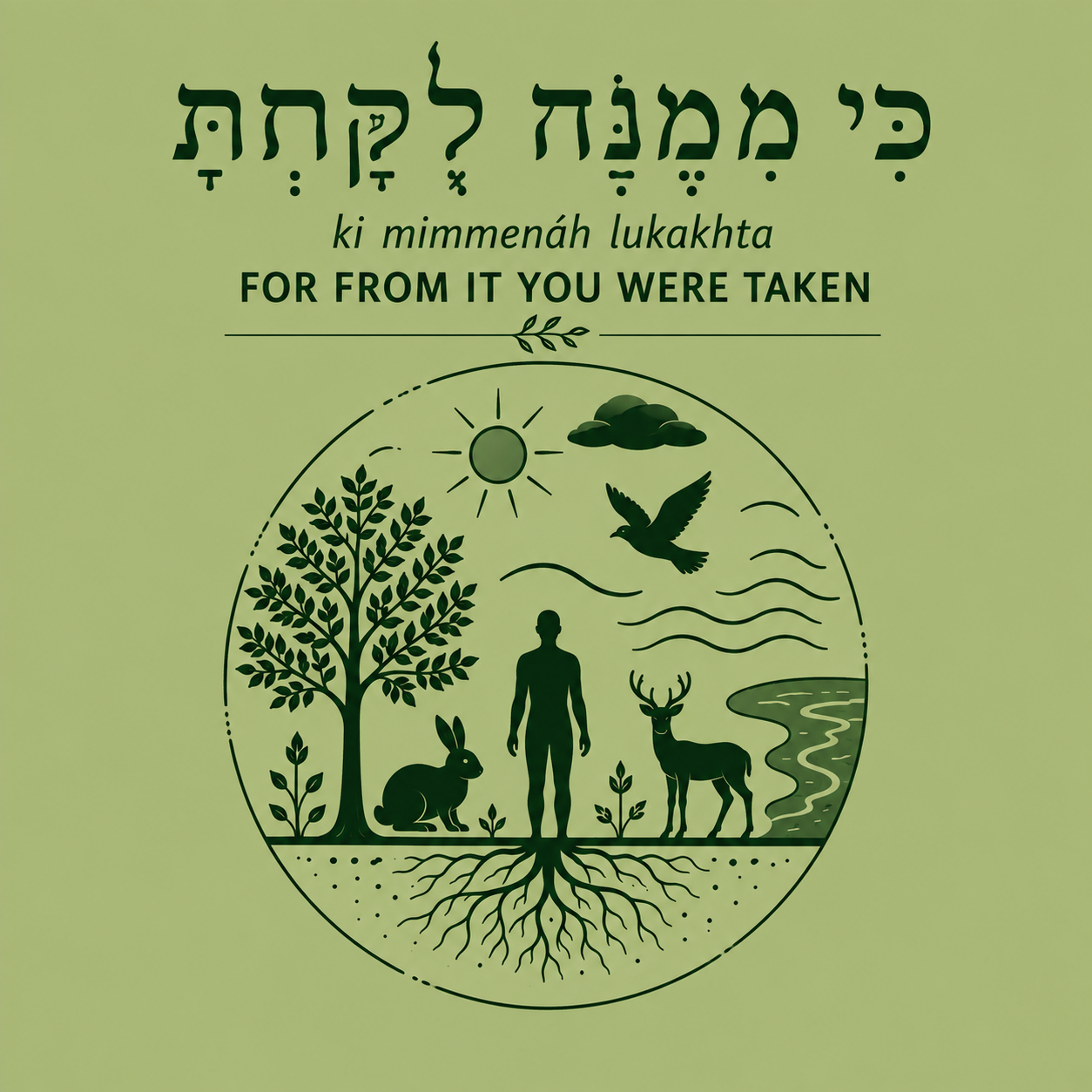
A humanist reading of כִּ֥י מִמֶּ֖נָּה לֻקָּ֑חְתָּ


 A humanist reading of כִּ֥י מִמֶּ֖נָּה לֻקָּ֑חְתָּ  — ki mimenah lukakhta,

"for from it you were taken" (Genesis, 3rd chapter)  


ki mimenah lukakhta — For from it you were taken.

I am not separate from the world.
I am taken from the same earth as every human being,
from the same living world as the animals,
from the waters, the plants, the soil, and the air.

My life is one life among countless lives.
My body is made from the world around me,
sustained by relationships I did not create,
and dependent upon forms of life I will never see.

I am part of humanity,
the lives of other people,
the lives of animals and plants,
the health of rivers, forests, oceans, and soil—
none exist entirely apart.

ki mimenah lukakhta...
From this earth I was taken.
To this earth I belong.
For the short span of my life,
I am one particular expression of a larger existence.

What happens to the whole touches each  individual.
What happens through the individual becomes part of the whole.

I am not the center of life.
I am a participant in it.


The Book of Ruth ~ Where others go, I will go

Naomi comes home with nothing left to carry.

Her husband dead. Her sons gone. The household dissolved. In that moment, the world she knew is gone too. What remains is alone-ness, unstructured and overwhelming—the kind that makes you wonder if staying alive is even worth it anymore.

Then there's Ruth.

Ruth could've walked away. She was young. She had options. The story doesn't hide this—she stands at a crossroads and chooses the harder path: the one with more pain attached.

Why?

Maybe because the story knows something we're still figuring out: we are not meant to be in isolation.

When Ruth says "your people will be my people," she's not just making a promise. She's building a container for Naomi's broken heart. She's creating a space where pain can exist without destroying the person carrying it.


Here's what the text shows us:

Emotions don't disappear when shared. But they change shape.

Out in the fields, Ruth works the edges of other people's lives. She gathers what's left behind after the harvest. It's humbling work. But there's dignity in it—because she's not invisible. Boaz sees her. His workers make room for her. The grain doesn't care where she comes from.

Being seen while struggling might be the most powerful thing anyone can give each other.


By the end, the townspeople look at Naomi and say something surprising: this woman who came back empty—she has more than she had before. Not because Ruth replaced her sons. Not because the math worked out perfectly.

Because she wasn't alone.


Ruth teaches us that community doesn't fix what breaks. It doesn't bring back what's lost. But it gives you somewhere to stand when the ground beneath you shifts.

It tells you: Where others go, I will go.

Sometimes that sentence is all we have. 

A Non-Theistic Midrash on the Moon

The sages asked: Why was the calendar entrusted to the moon rather than to the sun?

One answered: Because the sun teaches daily effort and the moon rests.

Another answered: Because the sun appears unchanged, but the moon changes.

The teacher rose and said:

Neither has understood the matter completely. The moon appears to grow and diminish, yet no one imagines that part of it has been lost. Its fullness remains even when hidden from sight. It is our position that changes, not the moon itself. The moon is like Acceptance.

The disciples asked: If the Acceptance never changes, why do we sometimes feel close to it and at other times abandoned?

The teacher replied: 

When clouds cover the moon, do you say that the moon has ceased to exist? When the new moon cannot be seen, do you mourn its destruction? You know that what cannot be seen has not ceased to be.